They're some pretty strange friends, eh!
Well, we want to break a lance—and not a loaf of bread—for these somewhat over-the-top friends. We're not breaking bread because the only way to taste oil (as with wine) is by drinking from a glass of oil alone.
Then we can make all the combinations we want but the oil must be tasted pure.
It's not just any glass, it's a stemless, footless blue tulip glass that directs all the aromas upwards.
Why is it blue? Because tasting oil is a sensory experience that unfortunately doesn't involve sight. "Why?" you might be wondering, "the color of oil is so beautiful!" It is beautiful, yes, and it's equally beautiful to notice all its nuances, from straw yellow to bright green, but it's not crucial in assessing its quality. Moreover, all that glitters is not oil, because the color of oil can easily be falsified, which is also why it can't be considered during an official tasting—but among friends, yes!
It depends on many factors:
● the cultivar
● harvest time (early, at veraison, late)
● conservation
The only thing you need to worry about is if you notice strange reddish and/or brownish streaks; in that case, the oil might not be good. So keep your eyes peeled, always!
Now let's focus on smell and taste.
How do you taste olive oil? There's THE official, one-and-only technique.
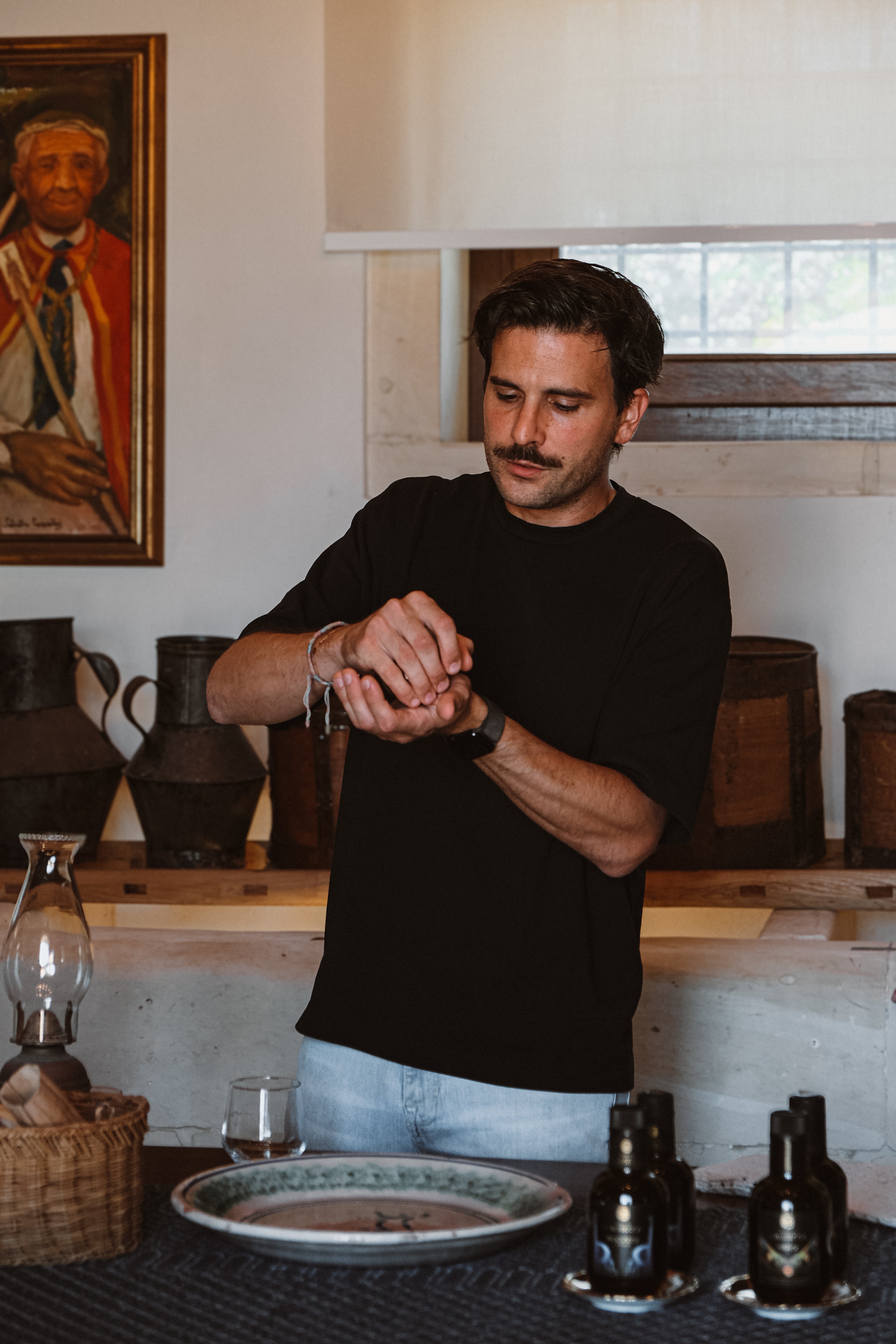
Pour a little oil into a glass, cover it with the appropriate cap, and then warm it by rubbing your palms around the glass. When the glass feels warmer than your hands, you can begin tasting. Technically, the temperature is set at around 28°C (82°F). At that point, uncover the glass and hold it to your nose, inhale, and travel.
Repeat the process several times to avoid habituation, moving the glass closer and further away. This way, the released molecules will stimulate the 10 million olfactory neurons in your olfactory epithelium, and all the little drawers of your memory will open. Start assigning scents to memories: almond, artichoke, freshly cut grass, artichoke and tomato, pine nuts, and so on.
What a wonderful adventure inside your nose, huh!
Now it's time to raise the glass to your mouth and perform the "stripping" technique. It's a somewhat noisy sucking technique—and not very elegant to do in a restaurant :)—but it's crucial for organoleptic evaluation: it involves moving the oil from the tip of the tongue toward the edges using air quickly drawn in from the corners of the mouth. The mixture of saliva, air, and oil spreads across the taste buds, giving you the perception of bitterness, while the molecules rising up the nasal passages, through retronasal olfaction, release an infinite array of aromas.
Finally, breathe and if it stings your throat, it means the oil is good.
Meet your friends' eyes, raise your glasses, and cheers! (It's time to break bread and get the party started!).