Stories from la Tenuta


A Sicilian, a painter, a friend…
Gaetano Tranchino He was born in Syracuse in 1938 and lives in Syracuse peacefully and contentedly, always seeking to deepen and perfect his art. Leonardo Sciascia, his friend, would say of him: “Tranchino doesn’t work, he delights: that is, he paints with delight, with pleasure, as if on a prolonged vacation—so prolonged—continuous and intense that it absorbs his entire life.” Giving in to emotion before a painting by Gaetano Tranchino means visiting "the island never left" (Claude Ambroise – 2004) and listening to the "chronicle of a fairy tale" (Lucio Barbera – 1999), that tale of a Sicily that we want to tell the world also through the work of a great artist, who captures its mystery, fear, and wonder. It's the 1980s, Antonio is cultivating his olive trees while Gaetano is in the midst of his artistic production. However, the two first meet in other capacities: one as a doctor, the other as a patient, and since then they have been bound by a deep and sincere friendship. In his works, Gaetano keeps the myth alive and imagines the world as it should be. His paintings are made of memory and fable, and we Cavasecca have always imagined it a little like this: with its deep roots in the past and its long-term vision of the future. Like a dream made in the countryside, halfway between the mountains and the sea.
Learn more
EVO oil on pizza: raw or cooked?
Do you put the oil on the pizza before or after cooking? The correct answer is: both before and after! It's not us who say this, but Raffaele Sacchi, a professor at the Department of Agriculture at the Federico II University of Naples. And here's why: a drizzle of extra virgin olive oil before cooking helps bind and blend all the ingredients better, but above all because—in the specific case of tomato pizza—it helps the polyphenols in the extra virgin olive oil bind with the lycoptenes in the tomatoes in a sort of chemical reaction. The result is a burst of antioxidants, a true health boon. A drizzle of raw olive oil, on the other hand, helps restore aroma and flavor that could otherwise fade due to the high cooking temperatures. So all we have to do is follow the instructions and sacrifice: oil the pizza before baking and oil the pizza fresh from the oven. Don't disobey! What would you have put on this pizza with San Marzano tomatoes, grilled ham, and Apulian burrata? A drizzle of Firrisa or a drizzle of Miscazzè?
Learn more
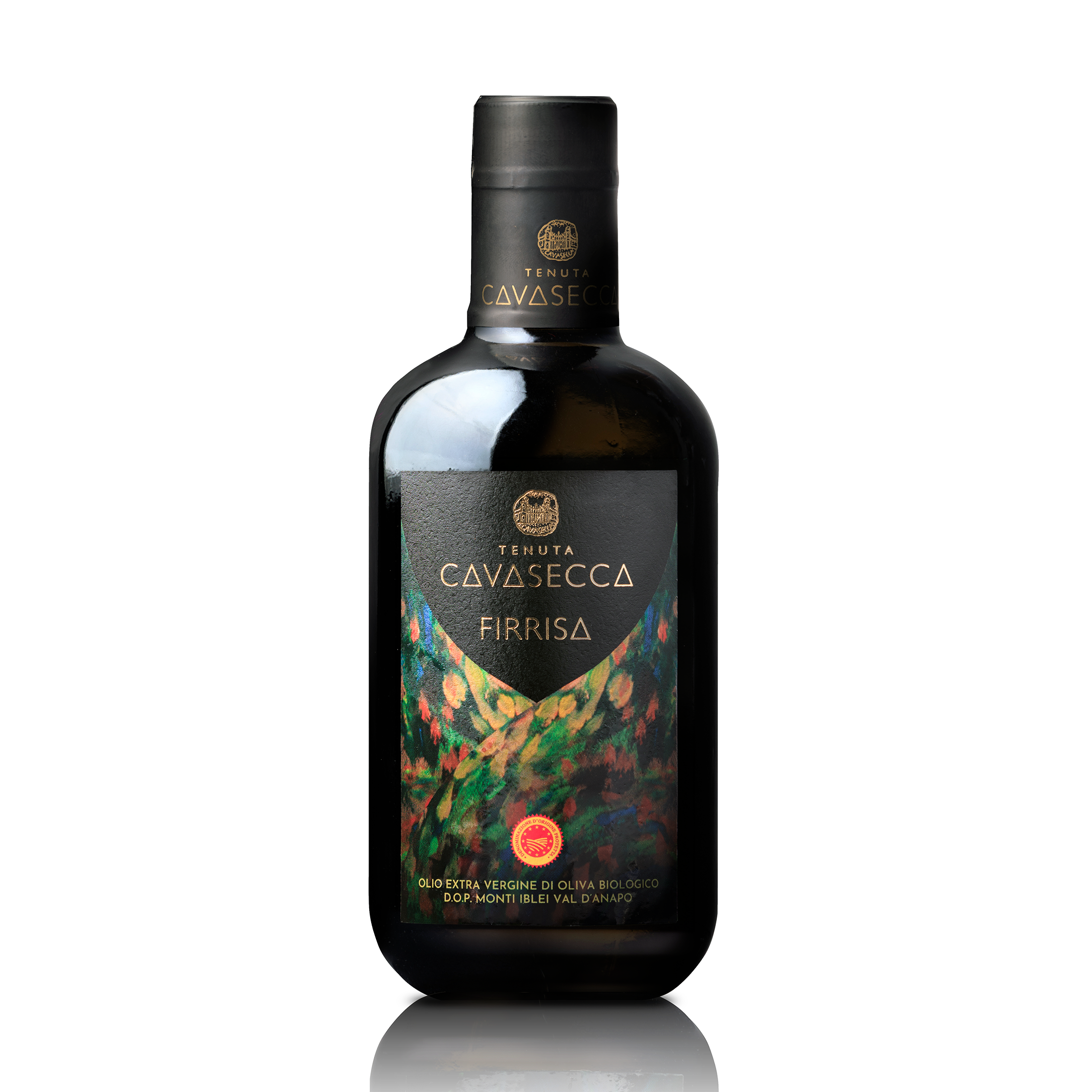
Do you want to discover the origins of olive oil?
Then we must look to the land where the sun rises first, a broad view that extends from that great sea of the Strait of Gibraltar, to that region which for obvious reasons is called the Levant. We are in the cradle of Mesopotamian and Egyptian civilization: it is precisely here that the cultivation of the olive tree originated, with the consequent production and then the miraculous consumption of olive oil as we know it today. In the 1970s, archaeological excavations brought to light the city of Ebla, and here the discovery: a royal archive of more than 30,000 inscribed tablets describing, among the various crops, the supply of cisterns and the commercial transactions of our much-prized olive oil. We are talking about the 24th century BC and it is the first historical evidence of written sources on agriculture and food. But how fascinating is it?
Learn more
Earth Day: Let's take care of our Pale Blue Dot
It was the 1970s, and the Green Generation felt the need to establish a world day dedicated to Earth. Today marks the 50th anniversary of Earth Day, and coincidence (not coincidence) dictates that we are in lockdown due to a pandemic. For this reason, we will reflect, now more than ever, and we will do so in our homes. We start from here... It's 1990, Voyager 1 is a full 6 billion kilometers from Earth, and Carl Sagan convinces NASA to turn the probe's camera to return photographs of our planet. Seen from there, it's nothing more than a grain of sand suspended in the enveloping cosmic darkness. In front of that surprising image he will say: From this distant vantage point, Earth may not seem particularly interesting. But for us, it's different. Look at that dot again. It's here. It's home. Earth is the only world known to support life. There is nowhere else, at least in the near future, where our species can migrate. Visit, yes. Colonize, not yet. Like it or not, for now, Earth is where we play our cards. There is perhaps no better demonstration of the folly of human vanities than this distant image of our tiny world. For me, it underscores our responsibility to deal more kindly with one another, and to preserve and protect the pale blue dot, the only home we've ever known. Now let's think about how we can take care of that pale blue and, indirectly, preserve our stay. There are no more excuses and no alternatives. We have plenty of time to do it!
Learn more
FIOI: they welcomed us into the family!
Something beautiful happened! You know when you read a page of a book and recognize yourself in that story, you feel part of that tale, you rediscover yourself behind those words, almost as if the author had investigated you and written about your life and your emotions. Well! That's what happened to us when we read the FIOI MANIFESTO. It begins like this: GUARDIANS OF THE OLIVE TREES AND ITALIAN ARTISAN OLIVE OIL , written in all capital letters. Because—we agree—important things need to be shouted out loud, they need to have as much resonance as possible! Then, word after word, we too are there with our olive trees between those beautiful lines. We venerate olive trees; they are at the center of our every thought, all day, every day, at least from dawn to dusk, and occasionally even at night. They are a source of joy and concern, almost like children to be cared for, some young, very young, others centuries old. They are our lifelong companions, a priceless heritage and the foundation of our civilization. We are merely the custodians of this legacy, to be protected and passed on at all costs. In our hearts, we know that this line of noble principles is the soul of Tenuta Cavasecca, and we also know that it is the foundation on which FIOI: the Italian Federation of Independent Olive Growers, is founded. The FIOI Board of Directors, after having carefully examined the production and extraction methods of our extra virgin olive oil, and after the sacrosanct investigations on the necessary respect of the parameters necessary to obtain a quality oil, has officially communicated to us that: Tenuta Cavasecca joins the fantastic world of FIOI Tenuta Cavasecca is authorized to use the FIOI trademark for commercial purposes. What can we say? It's completely superfluous but necessary: we're truly happy to have received this extraordinary recognition for our much-loved work. Now we'd like to leave you with the Federation's Manifesto, because it's beautiful, because it's a lesson, because it's a way of life, so that every independent olive grower can identify with it. Enjoy the read! --> FIOI
Learn more
We have guarded our Siracusana!
Beautiful things should be shared, so they become even more beautiful! It is with immense pleasure, great emotion, and a slightly trembling voice that we announce that we have obtained the prestigious Slow Food “Secular Olives” presidium. Now let's explain it properly. When you care for a centuries-old olive tree, you feel the weight of responsibility for a priceless legacy. Just approach one of those majestic olive trees to sense a soul that has nourished that place for hundreds of years. You feel the power of memory vibrating in the wind like the leaves on its branches. Its broad and mighty trunk, just caressing it, is like crossing the invisible threshold of a time machine. It instantly fills you with vertigo, bewilderment, and wonder. The estate's tree heritage, with its centuries-old Siracusana olive trees, is part of Slow Food's noble initiative to enhance the landscape and environmental value of centuries-old olive trees nationwide, which then produce excellent extra virgin olive oil. We'll work harder every day, respecting and caring for them. Like in love stories, it will be a balance of giving and receiving, and they'll repay us with their rewards. They are witnesses of the civilizations and divinities of the places. We are the custodians of this great legacy and part of an incredible miracle: their survival! Slow Food is proposing a new label that complements the mandatory label and, in addition to the legally required information, provides information on producers, plant varieties and the areas where they are grown, animal breeds raised, cultivation, breeding, and processing techniques, and animal welfare. Here's ours: Siracusana Zaituna variety - Narrative label Organic extra virgin olive oil Siracusana Zaituna from Tenuta Cavasecca: ● The territory and the variety The olive groves—more than 50 hectares containing approximately 300 Siracusana olive trees, ranging in age from 700 to 1,000 years—are located at an average altitude of 300 meters, on calcareous soil. The area is flat, characterized by an extremely dry climate and significant daily temperature variations. ● Cultivation The olive groves are fertilized with organic fertilizer twice a year. Weeds and pruning residues are chopped up and left in the fields to enrich the soil with organic matter and limit water loss. Drip irrigation is used as a backup, and natural products are used to control pests and diseases. ● The collection In September, before the drupes reach 5% veraison (the beginning of ripening marked by the change in color), the olives are picked, placed in perforated plastic crates and transported to the mill. ● The processing It takes place within four hours of the harvest at the Frantoi Covato continuous-cycle mill in San Giacomo, about 35 kilometers from the olive groves. The olives are washed and pressed, and the resulting paste is kneaded and passed through a two-phase decanter. ● Storage and packaging Siracusana Zaituna organic extra virgin olive oil is filtered and stored in stainless steel containers under nitrogen (which prevents oxidation). It is packaged for sale in dark glass or bag-in-tubes.
Learn more
What would you think if some friends invited you over for a glass of oil?
They're some pretty strange friends, eh! Well, we want to break a lance—and not a loaf of bread—for these somewhat over-the-top friends. We're not breaking bread because the only way to taste oil (as with wine) is by drinking from a glass of oil alone. Then we can make all the combinations we want but the oil must be tasted pure. It's not just any glass, it's a stemless, footless blue tulip glass that directs all the aromas upwards. Why is it blue? Because tasting oil is a sensory experience that unfortunately doesn't involve sight. "Why?" you might be wondering, "the color of oil is so beautiful!" It is beautiful, yes, and it's equally beautiful to notice all its nuances, from straw yellow to bright green, but it's not crucial in assessing its quality. Moreover, all that glitters is not oil, because the color of oil can easily be falsified, which is also why it can't be considered during an official tasting—but among friends, yes! It depends on many factors: ● the cultivar ● harvest time (early, at veraison, late) ● conservation The only thing you need to worry about is if you notice strange reddish and/or brownish streaks; in that case, the oil might not be good. So keep your eyes peeled, always! Now let's focus on smell and taste. How do you taste olive oil? There's THE official, one-and-only technique. Pour a little oil into a glass, cover it with the appropriate cap, and then warm it by rubbing your palms around the glass. When the glass feels warmer than your hands, you can begin tasting. Technically, the temperature is set at around 28°C (82°F). At that point, uncover the glass and hold it to your nose, inhale, and travel. Repeat the process several times to avoid habituation, moving the glass closer and further away. This way, the released molecules will stimulate the 10 million olfactory neurons in your olfactory epithelium, and all the little drawers of your memory will open. Start assigning scents to memories: almond, artichoke, freshly cut grass, artichoke and tomato, pine nuts, and so on. What a wonderful adventure inside your nose, huh! Now it's time to raise the glass to your mouth and perform the "stripping" technique. It's a somewhat noisy sucking technique—and not very elegant to do in a restaurant :)—but it's crucial for organoleptic evaluation: it involves moving the oil from the tip of the tongue toward the edges using air quickly drawn in from the corners of the mouth. The mixture of saliva, air, and oil spreads across the taste buds, giving you the perception of bitterness, while the molecules rising up the nasal passages, through retronasal olfaction, release an infinite array of aromas. Finally, breathe and if it stings your throat, it means the oil is good. Meet your friends' eyes, raise your glasses, and cheers! (It's time to break bread and get the party started!).
Learn more
"Unfiltered oil, any residue does not affect the quality": bullshit!
Let's find out when tradition must necessarily give way to innovation. After being extracted from olives, extra virgin olive oil has an opalescent, cloudy appearance. This is because it contains suspended particles of water and other organic substances—the quantities of which vary depending on the extraction method and the quality of the mill. We're sure you've noticed these residues at least once, clearly visible because they settle over time at the bottom of the storage container or simply at the bottom of your grandmother's or aunt's oil cruet. This isn't a good sign at all! The coexistence of water, nutrients, and microorganisms can quickly lead to the formation of the sensory defects of sludge and rancidity. But what exactly happens? Water, dust, soil, proteins, enzymes, and all the suspended matter—composed of olive fragments, pits, leaves, and various impurities—are highly reactive and can trigger degradation processes in the oil. How can this be fixed? By passing the oil through a porous medium (usually a cardboard filter), foreign bodies and water molecules are retained, effectively eliminating them from the oil. By separating the compounds involved in chemical reactions, the risk of defects occurring is prevented, at least in the short term. Therefore, filtration undoubtedly results in a more stable, clear, and long-lasting product. This explains why filtering oil extends its life! We would like to point out that the filtering process is solely intended to further enhance the quality of the extra virgin olive oil. This additional step in the production process has direct costs in terms of equipment and labor, as well as other costs, such as the inevitable loss of product. Indeed, during each filtering session, a quantity of oil remains trapped in the filters pressed by the machine and is released only at the end of the process (as clearly visible in the video). The oil that falls from the filters collects in the drip tray and is then disposed of. A quantitative loss entirely justified by a clear improvement in the quality of the product! So what do we do? We filter!
Learn more
SuperHERO or SuperEVOO?
Extra virgin olive oil has three historic enemies, but with our help, it can defeat them all. You read that right: not one, not two, but three enemies—the stuff of Sergio Leone movies. Here are the candidates for the three-way match. Oxygen It's invisible, yet deep down it's up to all sorts of mischief. For oil, there's no more insidious and ruthless enemy; it threatens the olive from the moment it's harvested. To combat it, we practice the expert art of hand-picking, preserving the integrity of the fruit and preventing oxidation. Furthermore, we transport the olives to the mill within hours of harvest and rely on a continuous-cycle system, ensuring the olives, olive paste, and oil are never exposed to air. Oxygen is also eliminated during storage; the oil is kept under a nitrogen blanket. The light Oil is photosensitive, meaning its organoleptic properties change when exposed to light. This is why we use dark glass in our bottles and store them indoors, away from direct light sources. The high temperatures Heat can also deteriorate oil. Keeping oil at its ideal temperature of 16-20°C (60-68°F) best preserves its quality; significantly lower or higher temperatures significantly reduce the product's shelf life. A bit like Batman, our SuperEvoo needs collaboration, he needs Alfred's fundamental support. But by taking all these essential precautions during harvesting, production, and storage, we emerge victorious: we are able to slow the oxidative process that reduces phenolic substances, vital antioxidants with countless health properties. Only with these care are we able to deliver a product to you that has retained its organoleptic properties, aroma, and flavor intact. Now it's your turn, a bit like Robin, to be providential, take the best care of our/your oil, intervene at the right time: store it in a closed place away from direct sources of light and heat, always put the cap on and you'll see that everything will go smoothly – like oil!
Learn more
Turn it however you like, the laboratory analyses and tasting speak clearly.
Extra virgin olive oil, virgin olive oil, and olive oil. What's the difference? Italy, along with Spain, Tunisia, and Greece, is among the world's leading olive oil producers, yet there's often little knowledge about the subject. We need to catch up; let's do our homework! Regulation (EEC) 2568/1991, with subsequent amendments and additions, establishes the exact quality standards required for an oil to be labeled "EXTRA VIRGIN OIL." Let's proceed in order. Extra virgin olive oil and virgin olive oil. Extra virgin olive oil and virgin olive oil are both the result of the first pressing of olives. The main difference lies in the organoleptic qualities and the percentage of oleic acid (acidity): ● extra virgin olive oil: it is an oil without defects, with notable qualities and whose acidity is less than 0.8 grams per 100 grams; ● virgin oil: is an oil that has some defects but does not exceed the maximum acidity limit of 2 grams per 100 grams. Our oils have an acidity level of less than 0.2 grams per 100 grams: this not only allows us to fully qualify for the Extra Virgin Olive Oil designation, but also to comply with the more stringent Monti Iblei DOP regulations, whose maximum oil percentage limit is set at 0.5 grams per 100 grams. After this brief self-congratulatory digression, let's proceed with the other indications. Extra virgin olive oil and olive oil. The fundamental difference lies in the production process. Extra virgin olive oil is always produced using mechanical processes. Olive oil, on the other hand, is a blend of refined oil (extracted using chemical solvents) and virgin oil. In this case, the acidity level must not exceed 1 gram per 100 grams. It's important to emphasize that the acidity of oil cannot be determined by tasting, but only through chemical analysis. Organoleptic analysis (panel testing), on the other hand, allows us to detect other qualities through smell and taste. Indeed, if we really want to be honest, the real goal of panel testing is to identify product defects. But that's another beautiful story that we'll tell you another time.
Learn more
Saying extra virgin is like saying grand cru. What's the right price for extra virgin olive oil?
Those unfamiliar with EVOO culture usually prefer light, sweet olive oils with little character, just like those tasting wine for the first time. This isn't a fault, because the taste for great oils and great wines is an acquired taste: it's education, it's culture. But we're tired of making the best of a bad situation. One thing deeply bothers us: while wine is rightly classified into various quality levels, in the world of olive oil, the confusion in communication is such that you can buy nothing less than an extra virgin olive oil for €2.99. Unbelievable! Instead, speaking with full knowledge of the facts from the perspective of oil producers who grow their own olive trees, quality oil should cost at least €8 per liter. No, that's not heresy, it's just mathematics. Assuming that 9 kg of olives are needed to produce one liter of oil, and considering a price of €0.88 per kg, without resorting to Euler, a simple multiplication brings us to almost €8. All other costs are not included here, but we've still established a minimum threshold far from €2.99. We're listing them for your information: ● land and plant maintenance costs (fertilization, organic treatments, pruning) ● collection costs (in our case manual) ● transport costs ● milling costs ● bottling costs ● packaging costs ● certification costs (DOP, IGP, BIO) ● taxes and duties However, when faced with a product whose price varies from 3 to 20 euros per litre, even the most expert consumer will be disoriented and anyone will have wondered why there is such a great variety of prices for the same product. Well the answer is simpler than expected: it's not the same product! We're proposing a revolution: a revolution in labels. Because, just as it's impossible to write Barolo on a bottle of table wine, it shouldn't be possible to write extra virgin on a bottle of ordinary olive oil. We have no resentment against ordinary olive oils, especially since they aren't always necessarily bad, but let us tell you: extra virgin olive oil is something else entirely. It's a superior product, just like a grand cru, and should be communicated and marketed as such. A true extra virgin is one of those that, when you put your nose into the glass, you can smell the freshly pressed olives; a true extra virgin is one of those that explode in your mouth, like when you crush an olive between your teeth, you immediately taste the bitterness on your tongue, and then you inhale and cough because as soon as it hits your throat there's nothing you can do, you taste the spicy flavor! Unfortunately, sensory and organoleptic characteristics cannot be perceived from an unopened bottle on a shelf, and Italian laws do not help us, because they currently give too broad a definition of "extra virgin olive oil." For this reason, the consumer has only one option left: to be guided by a variable that is decisive and determining in this case: the price!
Learn more
The Essential Christmas: Happy Holidays!
We complained every year about the preparations for Christmas, the rush for gifts, the planning of the menu. We've complained every year because we didn't feel like putting up the tree, seeing our aunt back from the north, our mother's sister-in-law's cousins' children, or our mother-in-law. This year we're given the option of not seeing anyone, and what do we do? We're complaining anyway! We're never satisfied; complaining is innate, it's the human condition. Or perhaps we miss those social relationships that are no longer so obvious. And we miss them precisely for this reason, because they're no longer at the discretion of our own desires and will, but suggested and regulated, measured out to do us the least harm possible. But this slowdown isn't necessarily a bad thing. Stepping back allows us to look at a work of art in its entirety. Let's take them, it will appear more beautiful! We're all constantly connected, constantly learning about the news, hyper-stimulated by images, posts, stories, tweets. We forget that the brain is a slow machine, and all this rushing around causes us anxiety. So let's slow down, let's follow neurobiology, let's not chase old-fashioned party models, let's learn to use the parachute we've been given. Let's slowly let it lead us, let's put our feet on the ground, turn on the lights, set the table, and celebrate this Christmas. Let's try to abandon the idea of making it seem "normal," because it isn't: one thing is certain, it will be unique, and we will remember it. But you can always eat a lot, drink well, and indulge in sweets. Hug each other with your eyes. Merry Christmas from the Estate!
Learn more